I found my brother’s suicide note while looking for printer paper in his home office.
I can’t do this anymore. I’m sorry I couldn’t be what everyone needed me to—
My hands shook as I dialed 911, then Ethan’s cell. It rang four times before he answered.
“Andrew?” His voice was flat, distant. “Why are you in my house?”
“Jennifer said you gave her your spare key yesterday. Said to water your plants while you were away on business.” I gripped the note. “Ethan, where are you?”
Silence.
“The Richmond Bridge,” he finally whispered. “I just needed to think.”
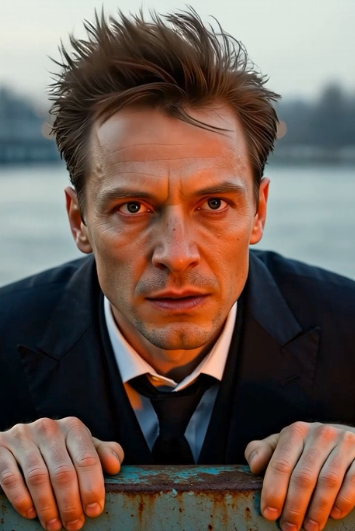
Twenty minutes of traffic that felt like hours. I found him standing at the rail, still in his suit from the CFO announcement party, staring at the water below.
“Don’t come closer,” he said without turning.
I stopped ten feet back. “I read it. The note.”
“Then you know I’m done pretending.” He laughed—a horrible, broken sound. “CFO at thirty. Dad’s ultimate success story. And I’ve never been more ready to die.”
“Ethan—”
“Do you know what it’s like?” He finally turned, and I barely recognized him. Hollow eyes, gaunt cheeks. “Twenty-eight years of being perfect. Harvard because Dad went there. Finance because Dad chose it. Rebecca because her father’s connections mattered. Every single decision made by committee, and I was never on it.”
“So stop,” I said. “Quit. Walk away.”
“And become what? You?” The venom in his voice was startling. “The disappointment? The one Dad mentions at parties with that apologetic smile? ‘Andrew teaches high school, bless his heart’?”
The words hit like a fist, but I stepped closer.
“Yes. Become me. Because I’m alive, Ethan. I’m actually alive.”
“You don’t understand—”
“I understand that you’re thirty years old and you think Dad’s approval is worth dying for.” Another step. “But here’s what you don’t know. Last year, Dad had a health scare. Thought it was a heart attack.”
Ethan blinked, confused by the shift.
“He called me from the hospital at 2 AM. Not you—you were closing some deal in Tokyo. And do you know what he said?” My voice cracked. “He said, ‘I was so scared I’d die and you’d remember me as the father who never came to your plays, who missed your award ceremonies, who made you feel small.’”
“He never told me—”
“Because you’re the success story he can parade around. I’m the son he actually talks to.” I took another step. “He told me he was wrong. That watching you become him was his biggest regret. He just didn’t know how to say it.”
Ethan’s face crumpled. “I got engaged to a woman I don’t love. I spent six years getting degrees I didn’t want. I just became CFO of a company I hate.” He gripped the railing. “How do I come back from that?”
“The same way I did.” I was close enough to touch him now. “You choose yourself. Today. Right now.”
“Everyone will know I failed—”
“No.” I grabbed his shoulder. “They’ll know you were brave enough to stop failing yourself.”
We stood there as cars rushed past, the bridge humming beneath our feet.
“I don’t know how to be anything else,” Ethan whispered.
“Then let me teach you,” I said. “Come stay with Jennifer and me. Take time to figure out who Ethan Morrison actually is when he’s not performing.”
He looked at me—really looked—maybe for the first time in decades.
“What if there’s nothing there? What if I’m just an empty suit?”
“Then we’ll find out together.” I held out my hand. “But not like this. Never like this.”
Slowly, shakily, Ethan took my hand and stepped back from the rail.
We sat on the bridge walkway, two brothers in the shadow of our father’s expectations, and Ethan cried for the first time since he was eight years old.
“I need to call Dad,” he finally said.
“Not yet. First, you need to call a doctor. Get help. Real help.” I pulled out my phone. “Then we figure out the rest.”
“He’s going to be so disappointed.”
“Good,” I said. “Let me be the golden child for once. I’m excellent at disappointing him—I’ve had twenty-eight years of practice.”
Ethan laughed—small, but real.
As I called Jennifer to tell her we’d need the guest room, Ethan leaned against my shoulder the way he used to when we were kids, before success and failure became the only languages our family spoke.
“Andrew?” he said quietly. “Thank you for being the disappointment. It saved my life.”
And for the first time, I understood: I wasn’t the family failure.
I was the one who got free.
Leave a Reply